
Resources


Calling Out a “Silent Killer”
For some people, the first “symptom” of hypertension is a deadly heart attack or stroke. Hypertension, or high blood pressure, now plagues nearly half of Americans. Some patients may experience mild symptoms, while others experience none at all. But hypertension nevertheless puts them at a greater risk for serious health conditions – like heart attack, […]


Disparities in Hypertension
The burden of hypertension falls disproportionately on communities of color. Now is the time to make hypertension history.
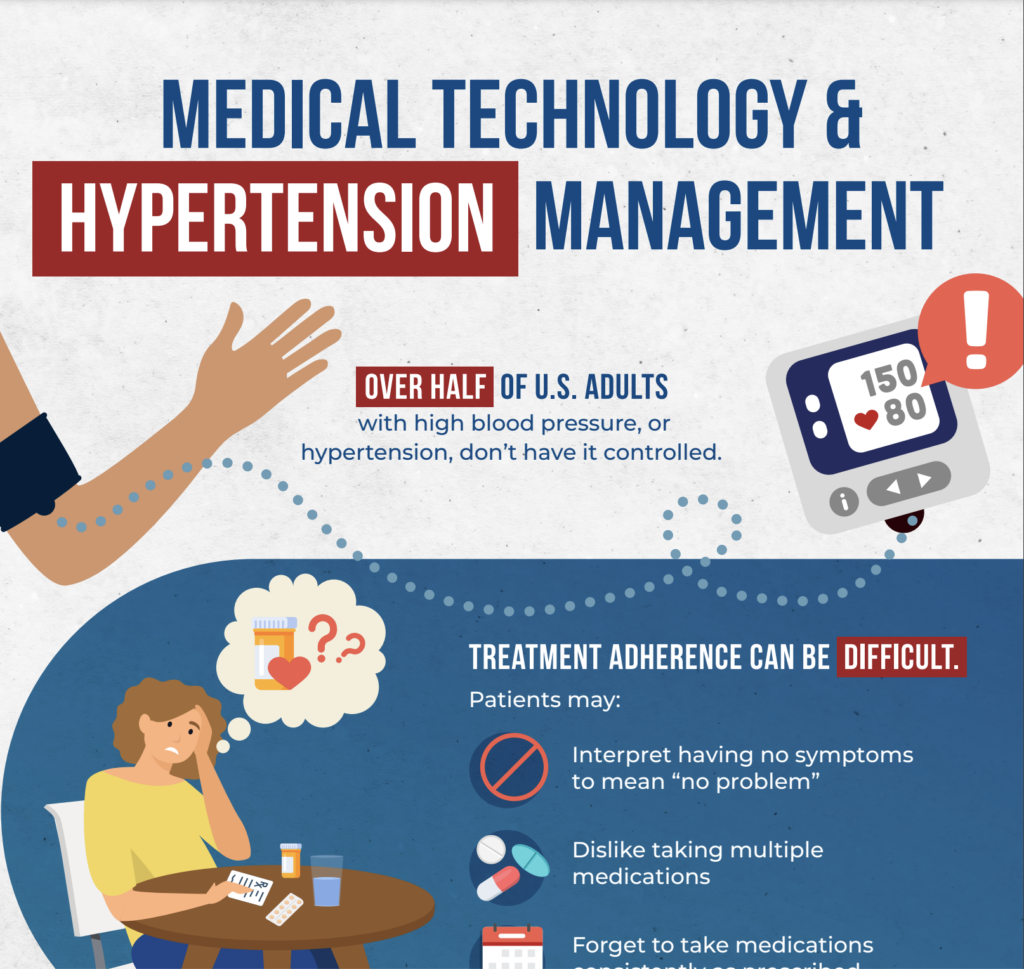
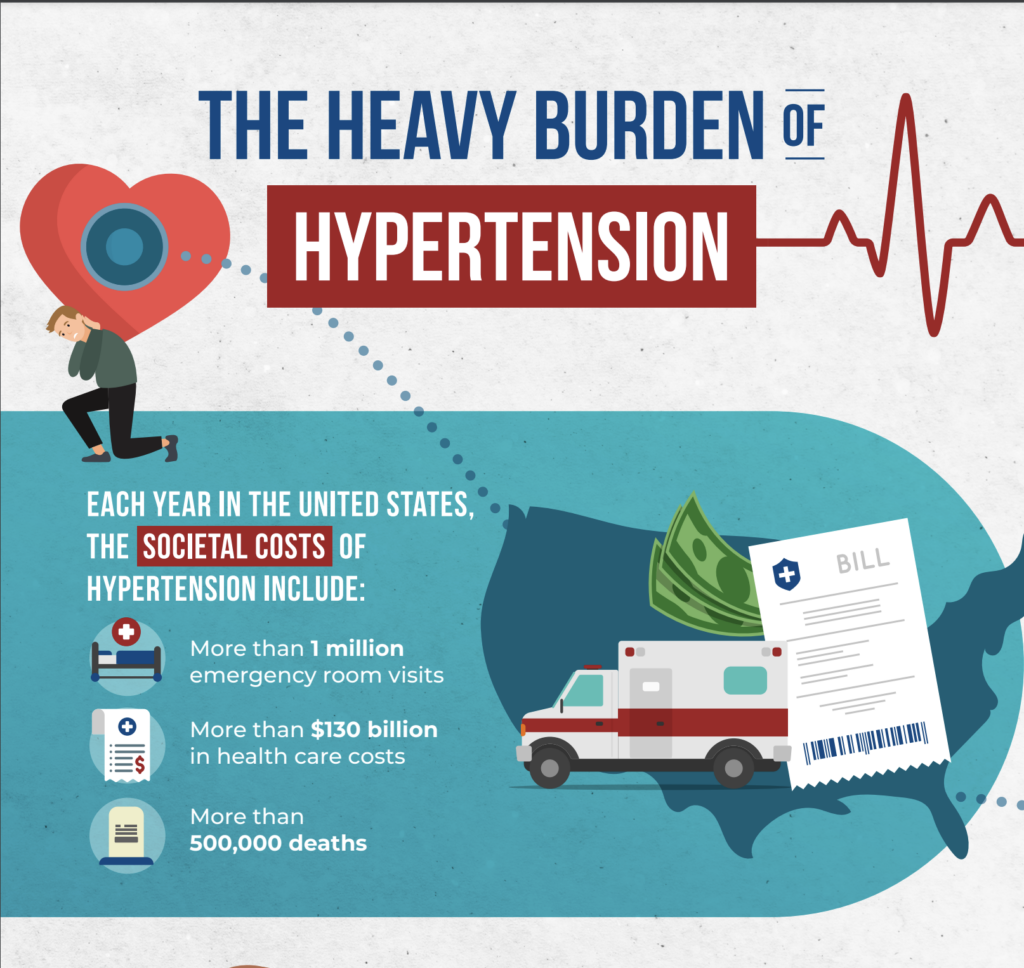
Medical Technology and Hypertension Management
Infographic
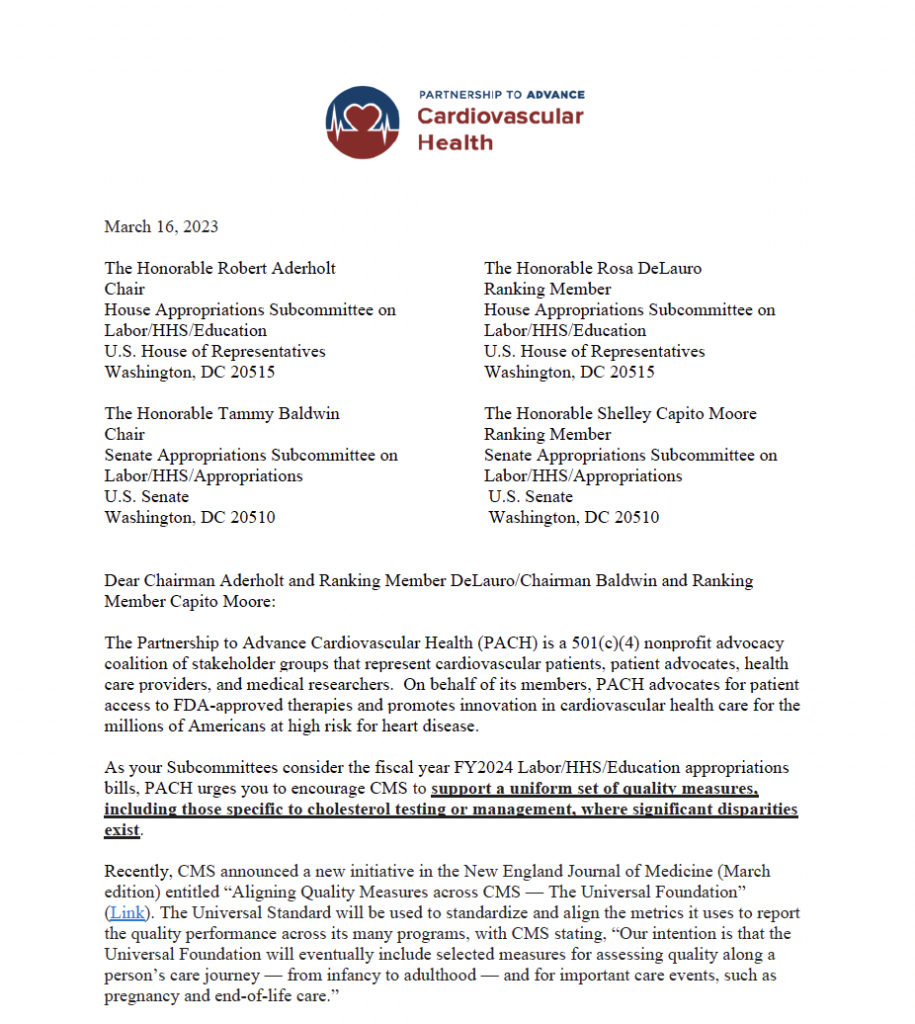
Letter to the House Appropriations Subcommittee on Labor / HHS / Appropriations
PACH wrote a letter urging CMS to support a uniform set of quality measures, including those specific to cholesterol testing or management, where significant disparities exist.
Let’s Make Hypertension History
It’s time for innovation, access and awareness. Together, we can make hypertension history.

Racial Disparities Still Haunt Progress Against CVD
Cardiovascular disease stubbornly holds its place as the number one cause of death in America. But don’t be misled into thinking heart disease presents an equitable burden. It has a disproportionately high impact on Black Americans, striking them more often and more seriously, on average, than their white counterparts.

Blacks, Hispanics, and Women at Higher Risk of Being Denied Life-Saving Medication
Black, Hispanic, and women patients in Arkansas are more likely to face insurance barriers when trying to access a cholesterol-lowering heart medicine, according to a new report.
Hypertrophic Cardiomyopathy 101
Hypertrophic cardiomyopathy, or HCM, is a genetic disorder that occurs when the heart muscle thickens, making it harder to pump blood.

The Importance of PAD Screening
Anahita Dua, MD, explains that symptomless PAD can be a silent killer. That’s why screening, testing and education are critical for patients.
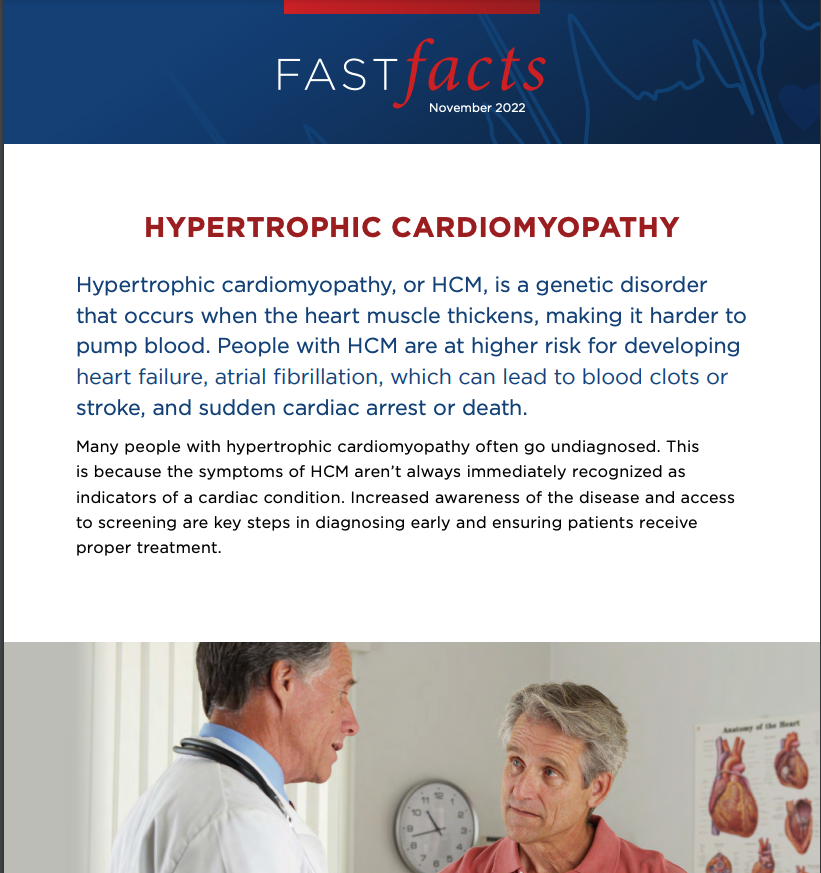
Fast Facts: Hypertrophic Cardiomyopathy
Many people with hypertrophic cardiomyopathy often go undiagnosed. This is because the symptoms of HCM aren’t always immediately recognized as indicators of a cardiac condition.