
World Amyloidosis Day

October 26 is World Amyloidosis Day, a time to raise awareness of a rare, often misdiagnosed disease and the importance of early diagnosis. Join the Partnership to Advance Cardiovascular Health online to help patients and families recognize the warning signs of amyloidosis—especially transthyretin amyloidosis, or ATTR—and understand the role of genetic testing in getting a timely diagnosis.
What is Amyloidosis?
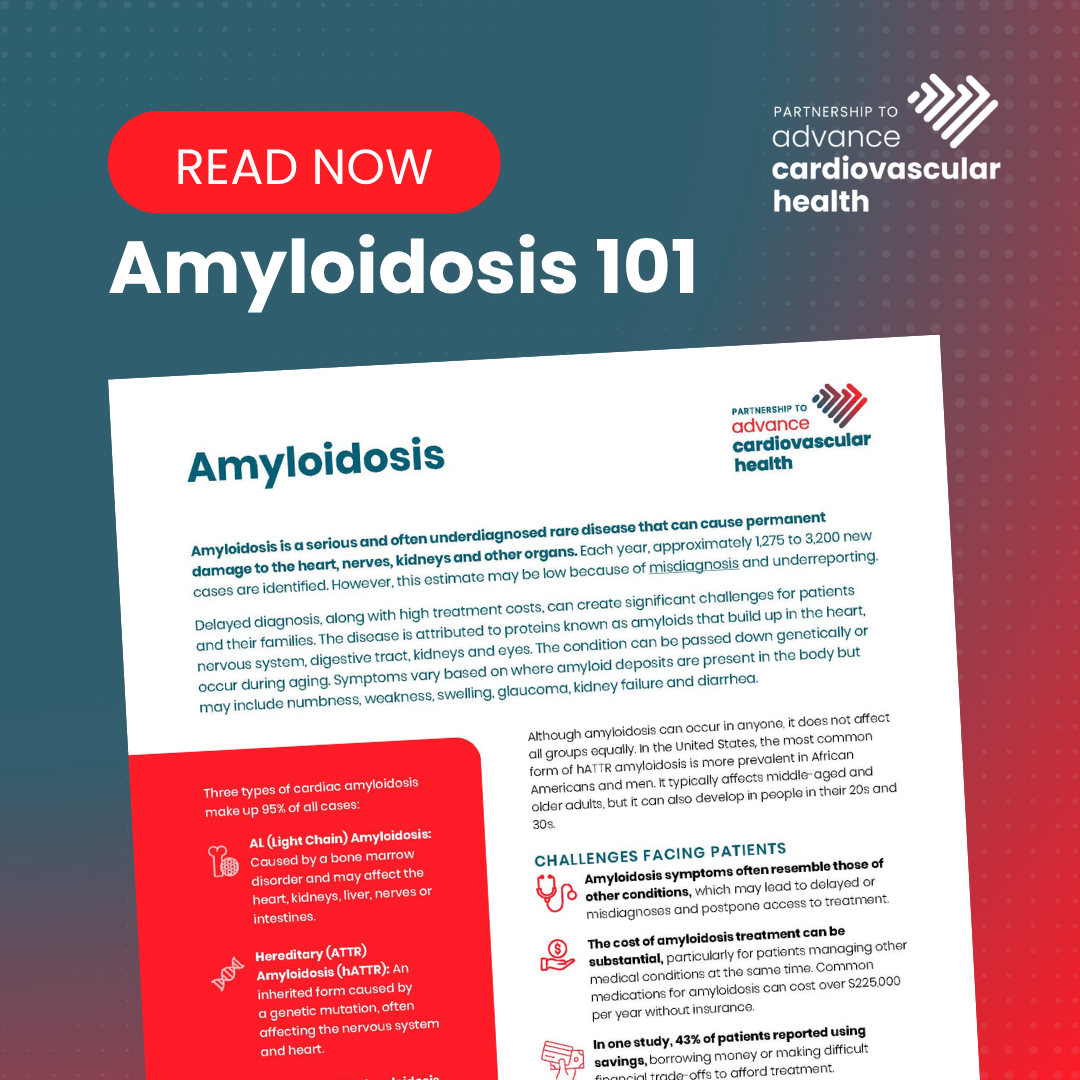
Amyloidosis is a serious, rare disease caused by misfolded proteins that clump together and build up in tissues and organs, including the heart, nerves and kidneys. Over time, these deposits can cause irreversible damage.
ATTR amyloidosis, the most common form in the United States, often affects the heart and can lead to heart failure. ATTR can be wild-type, which is linked to aging, or hereditary, which is caused by a genetic variant passed down through families. Because early symptoms such as shortness of breath, irregular heartbeat, carpal tunnel syndrome and numbness in the feet can mimic more common conditions, many patients wait years for an accurate diagnosis.
Protect Progress: Keep Innovation Moving for Amyloidosis Patients
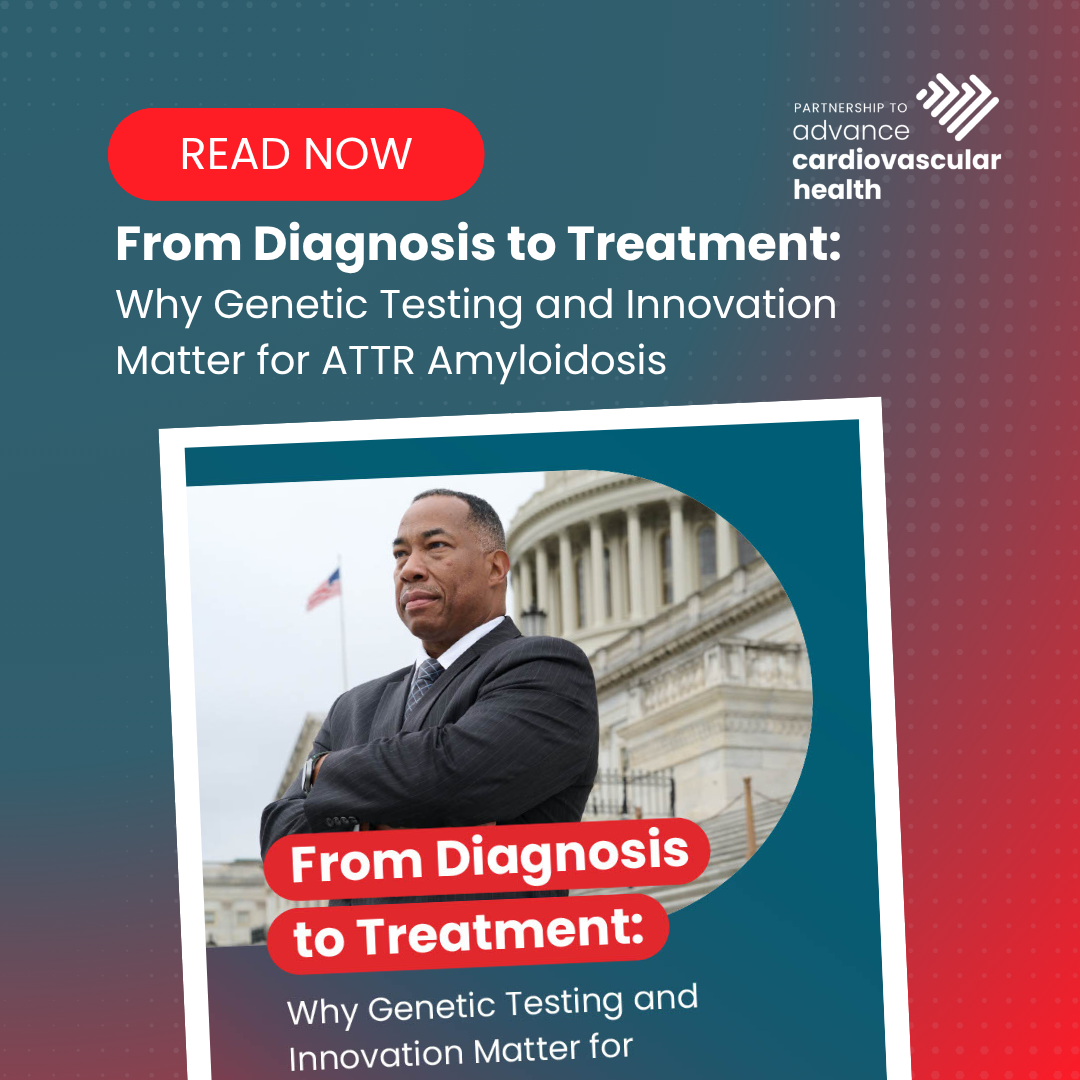
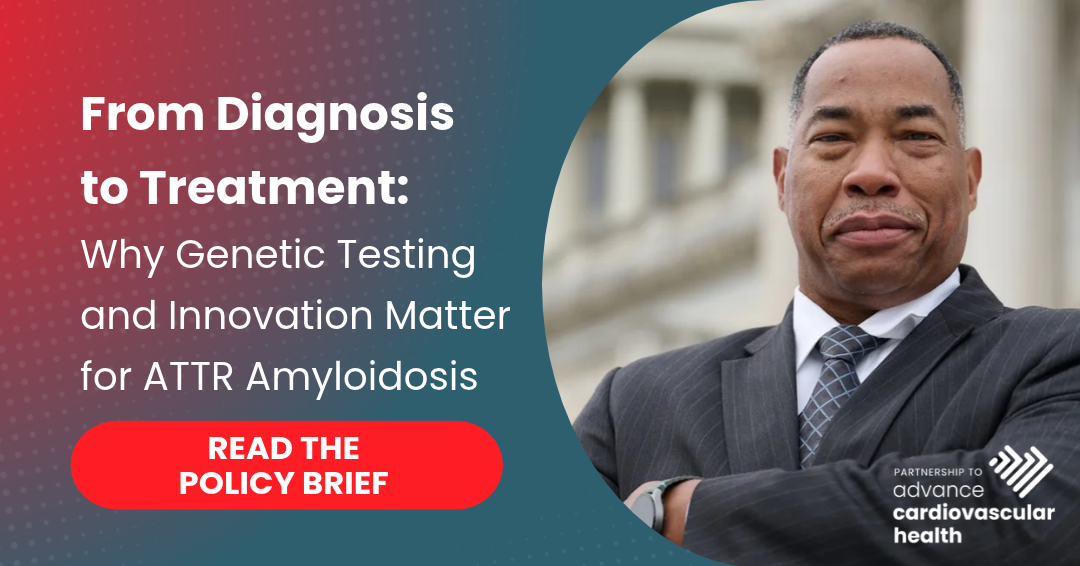
New treatments have transformed the outlook for people living with ATTR amyloidosis, slowing or even halting disease progression when started early. But current law gives genetically targeted treatments less time on the market than biologics before they qualify for Medicare price negotiation, which could discourage research into the next generation of therapies. The bipartisan MINI Act (H.R. 1672) would close this gap. Tell Congress: Pass the MINI Act.
How New Treatment Options for Amyloidosis Changed Giselle’s Life
Learn More About Amyloidosis

Engage on Socials

Post 1:
Today is #WorldAmyloidosisDay! #DYK? #Amyloidosis is a serious and often underdiagnosed rare disease that can cause permanent damage to the heart, nerves, kidneys and other organs. Learn more in @advcardiohealth’s toolkit: https://advancecardiohealth.org/world-amyloidosis-day/
Post 2:
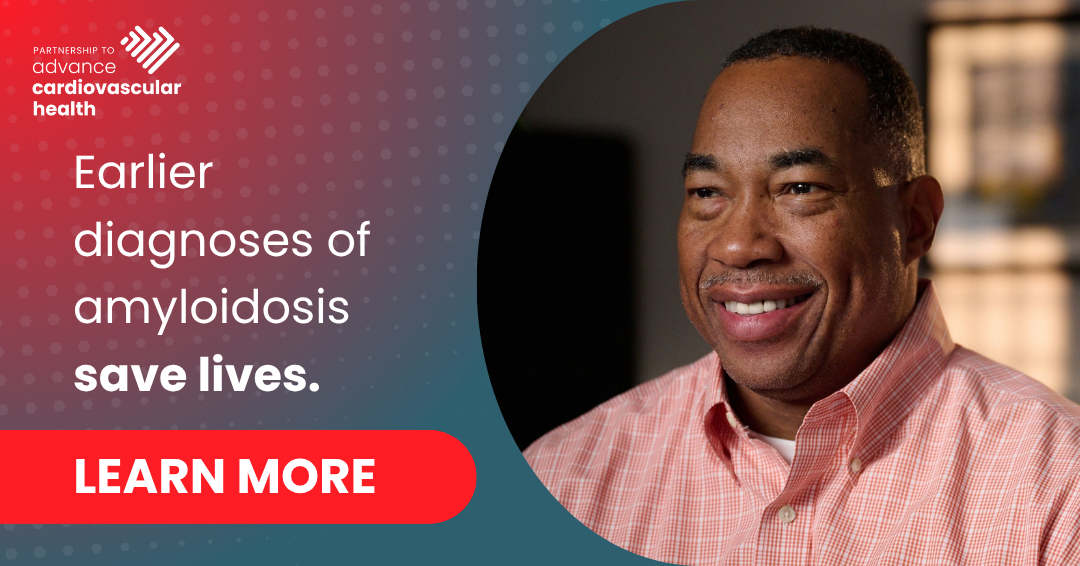
#Amyloidosis can affect multiple organs, including the heart. Earlier recognition and timely diagnosis are critical to improving outcomes for patients. Learn more this #WorldAmyloidosisDay in @advcardiohealth’s toolkit: https://advancecardiohealth.org/world-amyloidosis-day/
Post 3:
Policymakers can improve outcomes for people with #amyloidosis by promoting disease awareness, supporting earlier diagnosis and expanding access to appropriate testing and treatment. Learn more in @advcardiohealth’s #WorldAmyloidosisDay toolkit: https://advancecardiohealth.org/world-amyloidosis-day/